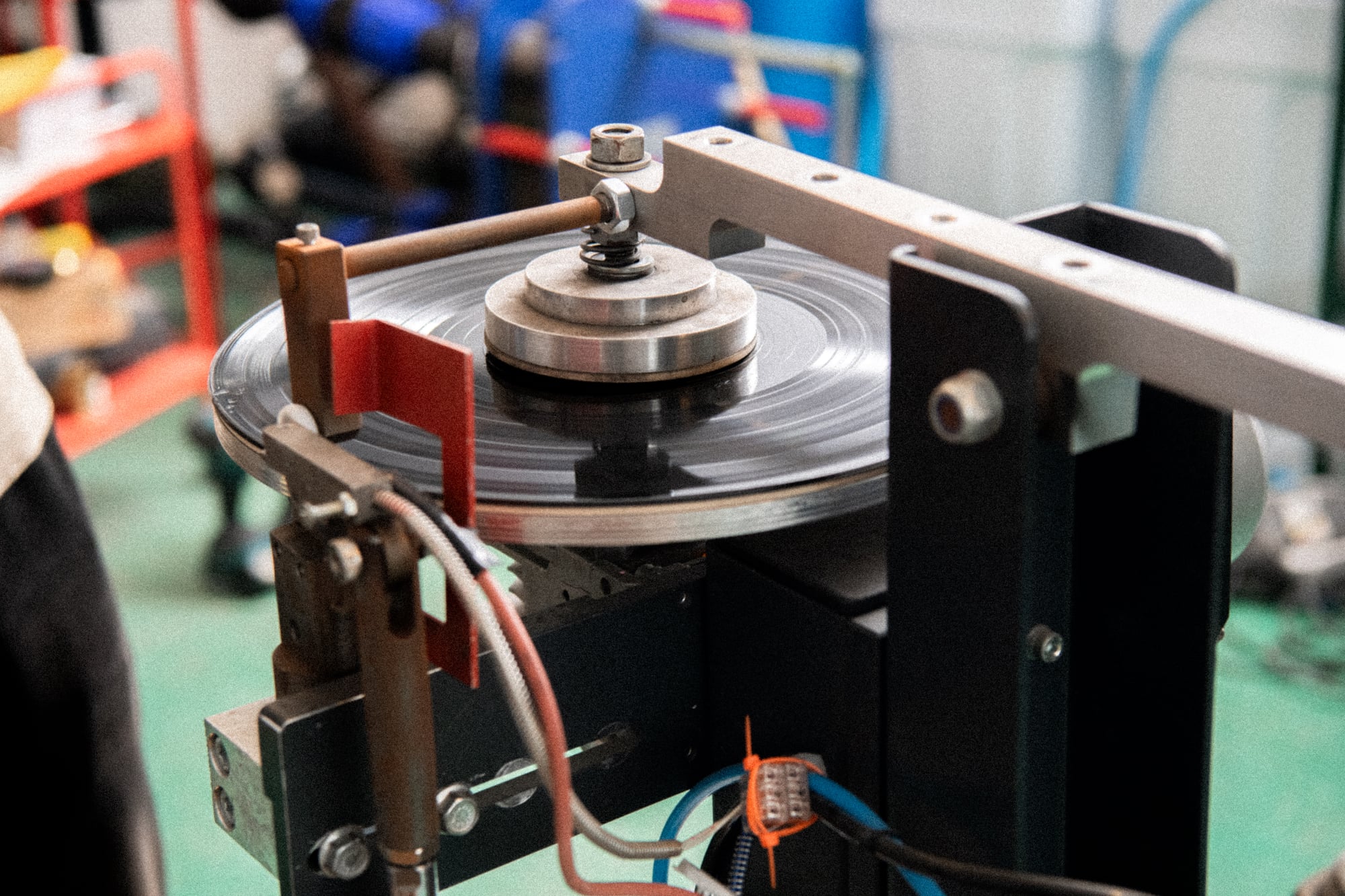
Inside the vinyl pressing plant, the work settles into the body before it settles into thought. Heat gathers around the machines. Eyes get sore from sending emails. Hands move quickly. The same motions repeat - lift, place, adjust - though never quite identically. A record warps, keyboard clicks, something jams. The work demands attention in short, constant bursts.
Time compresses. You look up, it’s three in the afternoon - the day has already moved on without you.
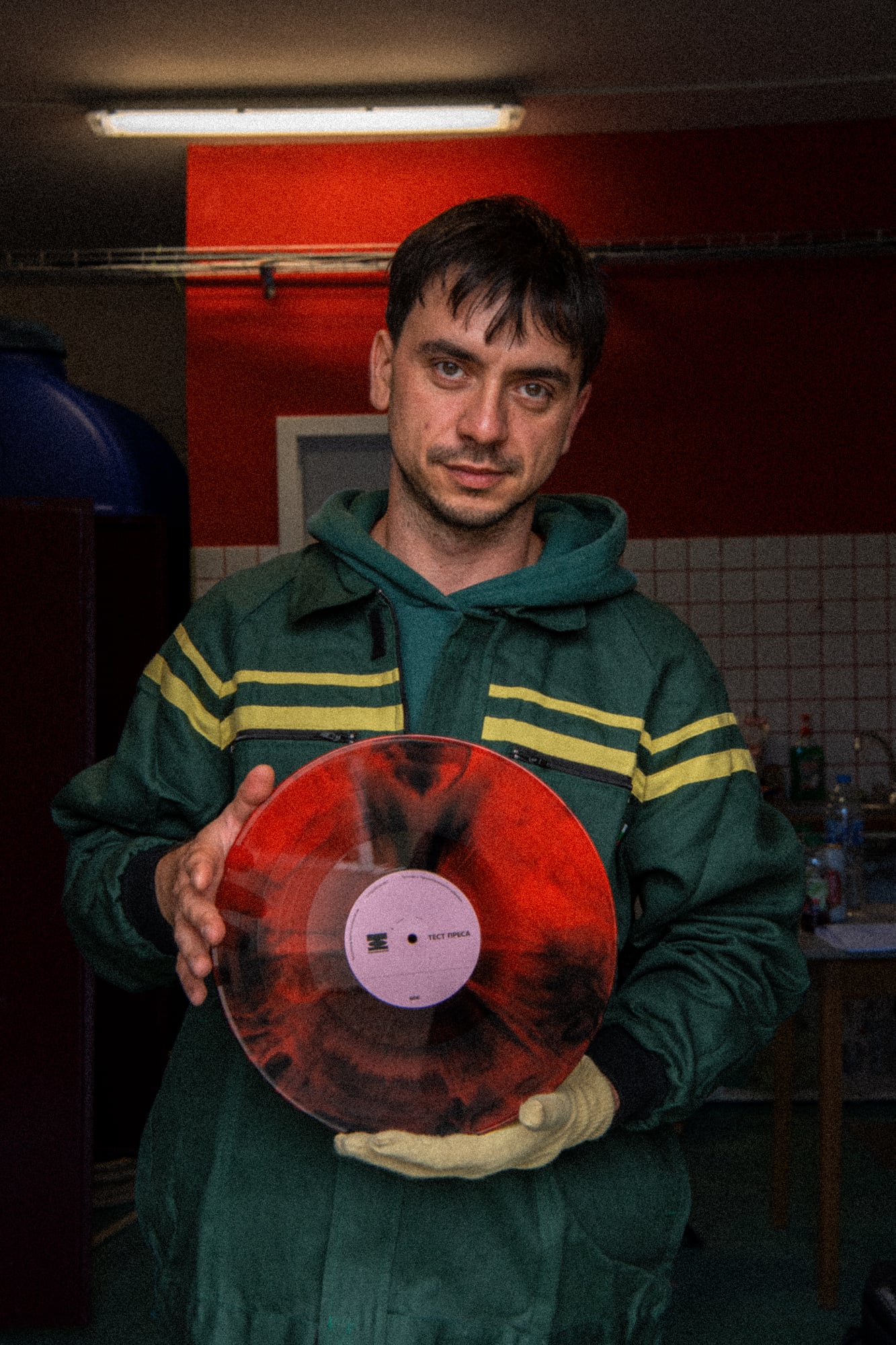
This is where Iliya Grigorov, better known by his rap pseudonym - Grigovor, spends much of his time nowadays. It’s the only vinyl factory in the Balkans, founded in 2025 in Bulgaria, and it’s called Rakamakafon. It has the capacity to press 20,000 records a month, making it the first of its kind in the country since the 1990s. The name was supposed to be different at first, but copyright issues led them to this one.
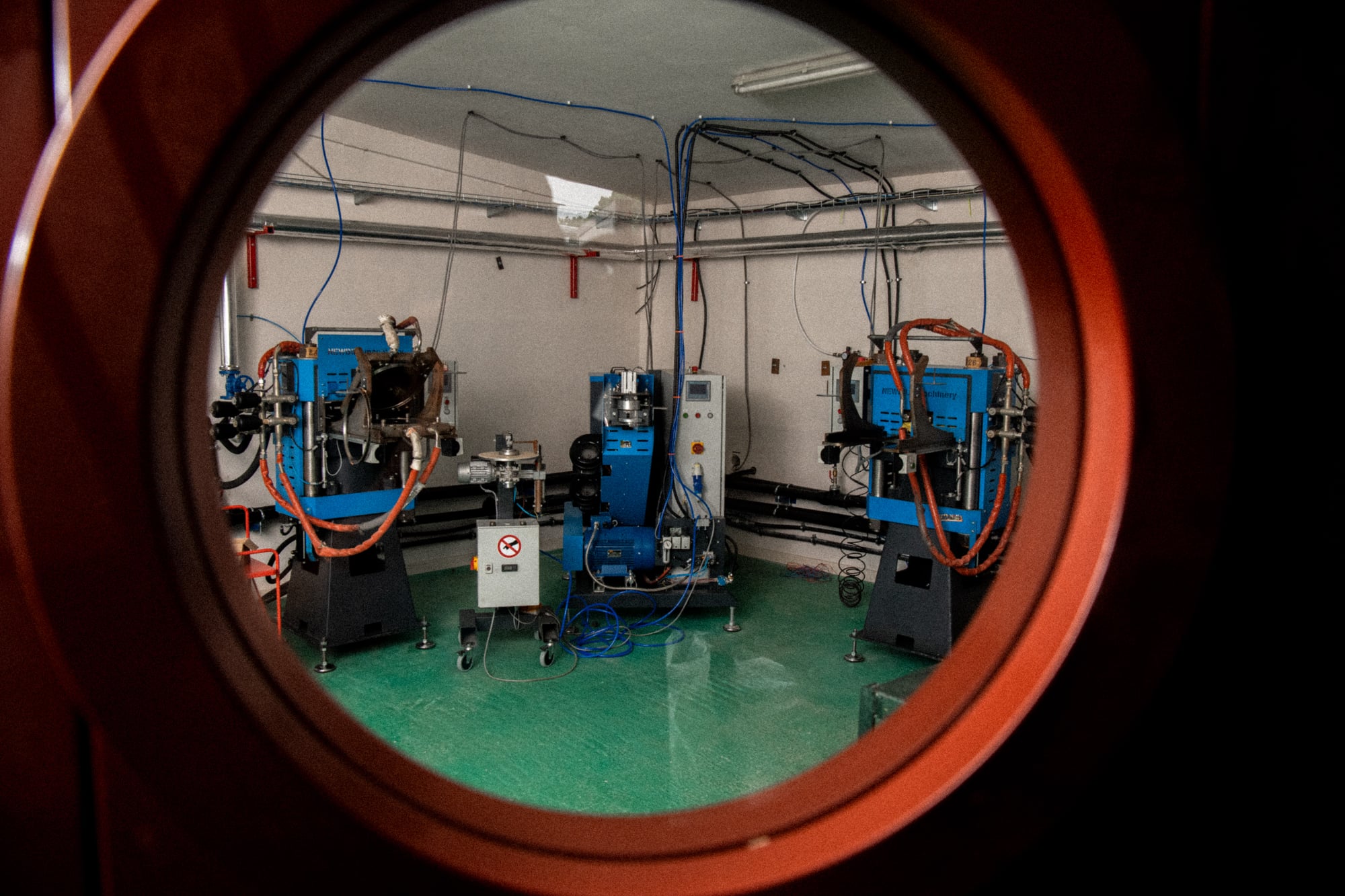
“We wanted to call it ‘Sofia Press,’ but we couldn’t. So, we chose something funny - to remind ourselves not to take it too seriously.”
Music there is physical: pressed into shape, cooled, stacked, boxed. It has its own sharp edges, it holds its weight. A finished form you can hold. The magic of sound packed into a 150-gram plate.
The music he makes outside the factory behaves differently, though. There, the process is less obedient. Sometimes it refuses to happen at all. That might sound like a problem. For him, it’s the condition of the work.
Grigovor is a Sofia-based rapper and is one of the most prominent figures in the Bulgarian hip-hop scene. His process and writing resist the conventional trend. He tends to work inward, not outward. His lyrics move between the abstract and the concrete, often circling questions of control, identity, and attention. At the same time, he tries to not take things too seriously and can make a song about something as simple as his messy apartment or his trusty old iPhone. He avoids obvious influences, not out of principle but out of necessity - whatever he is trying to reach, he believes cannot be borrowed.
He is also active in the rap collective So Called Crew together with his rap peer Jluch (Mathew Stoyanov) and their producer Gena (Evgenii Genchev).
Born in Plovdiv, Bulgaria, Grigovor spent part of his childhood in the nearby town of Batak, before he ended up in Sofia. He describes himself as a quiet child, often alone, comfortable in isolation. Not withdrawn exactly, but self-contained.
One of his earliest memories of music is not about melody or lyrics, but something very physical. His father, who worked as a DJ, once placed a speaker inside a barrel under a table. The bass was strong enough to make the wood tremble. As a child, Grigorov would sit underneath the table, feeling the vibration pass through his body and losing himself somewhere in the waves.
It was less about listening to the music and more about being inside the sound.
Later in his childhood, he was introduced to Pink Floyd’s albums, which he considers one of his earliest conscious encounters with music. He describes listening to the band as something closer to disorientation than enjoyment, more of an out-of-body experience. It demanded special attention that was almost tangible.
When he began writing his own lyrics and music, none of those experiences translated immediately.
His early lyrics were built purely around rhyme. Meaning came second, if at all. Words were chosen by how they fit together, how they lock into a pattern. The satisfaction was technical: making language behave and dance on the tongue, not exactly what it can make you feel or think about something. It was more of a challenge, an exercise, almost mechanical.
“At first, it was just rhymes,” he says. “I didn’t really care what I was saying.”
That approach didn’t hold. Over time, the structure remained, but the priority shifted. The question went from “Does it rhyme?” to “Is it mine?” That shift - from control over form to uncertainty about meaning - still defines how he writes.
Now, in 2026, he has been making music for over a decade, releasing multiple albums both solo and as part of “So Called Crew.”
____________________________________
His writing doesn’t follow a schedule. There are periods when inspiration strikes, and words come quickly, but sometimes that's not the case.
“Most of the time, nothing comes out.”
When it does, it starts loosely. Ideas appear without clear structure - fragments, images, partial thoughts. He writes them down without trying to organize them immediately. The shaping comes later: cutting, rearranging, testing what works.
“In the beginning, it’s chaos,” he says. “Then you try to see what stays.”
Forcing music rarely works. If anything, it interrupts the process.
“You can’t push it,” he says. “If you do, it loses something.”
What he is working toward is difficult to define even for him: a way of sounding novel without becoming unrecognizable to himself. He describes it as a kind of “rebirth” - not a rejection of what came before, but an attempt to build something new in the most genuine way.
That effort shows up in the shift in his writing. His more mature work leans toward abstraction - complex ideas, internal states, and impressions. More recent lyrics move toward objects and images, specific feelings and themes, physical details and story-lines. The important part for him is to be honest with himself from the beginning.
“If you start from something small - something personal - it hits harder. People connect to it more. We’re not as unique as we think.”
This subtle aspect alters the weight of the work. It anchors it in experiences you can recognize. This specificity forms a mountain of ideas, stories, and meaning behind the songs, making their influence on the listener stronger.
He applies the same philosophy to his life. He treats it as an improvisation. The way an artist would start writing a song - playing a few notes, forming a melody, making a simple beat, jotting down some lyrics to use as a mental trampoline, and then refining them later. He starts any big project in the same way, most recently Rakamakafon. Random unserious conversations with his mates are actually what led him to establish the whole business.
One of the clearest examples of his writing approach is the track “Bez Dni.” The title itself shifts depending on how you read it. Separated - the words translate from Bulgarian to “without days.” Put together as one word, they become “bezdni”, meaning “abyss.” The ambiguity is not decorative - it defines the song itself.
The track began as a deliberate constraint when Gena was making an album and had an idea for a song about death. Then Jluch and Grigovor started brainstorming what they could write about. Jluch thought of an old friend who had died at a young age, but Grigovor couldn’t come up with something right away.
“If you say something like ‘death is a black curtain,’ no one feels anything,” he says.
The point is not to define death, but to emphasise it. He describes thinking about the idea for days without writing. Then a single phrase appeared, which started a domino effect and unlocked the rest.
“You think about it for a long time,” he says. “Then two words come, and everything follows.”
Not everything gets refined in the process, though.
He remembers getting stuck on a track called “Izhod” (“еxit” in Bulgarian). The structure was there, but the ending could not come together. It was one of those times when the words were not coming to him.
Jluch happened to be in the studio that day. He remembers being drunk with Grigovor while working on the song. Gena was out of town, so they were trying their hardest to figure out how to record Grigovor’s verses properly.
Things were going well, but for some reason Grigovor couldn’t resolve his second verse. His first one was so complete and beautiful, Jluch remembers being unexpectedly affected by it.
“It was too good,” he says. “He didn’t know how to continue.”
Then Jluch, instead of trying to match the completeness of Grigovor, pulled out a sketch of a lullaby song for his daughter and both of them instantly felt that - yes, that would fit perfectly. That’s how the end of the album came to be.
“I wrote it drunk and happy,” says Jluch. “That feeling - that’s why you make music.”
There is no clear explanation for why it works. It simply does.
At the factory, that kind of flexibility is less common.
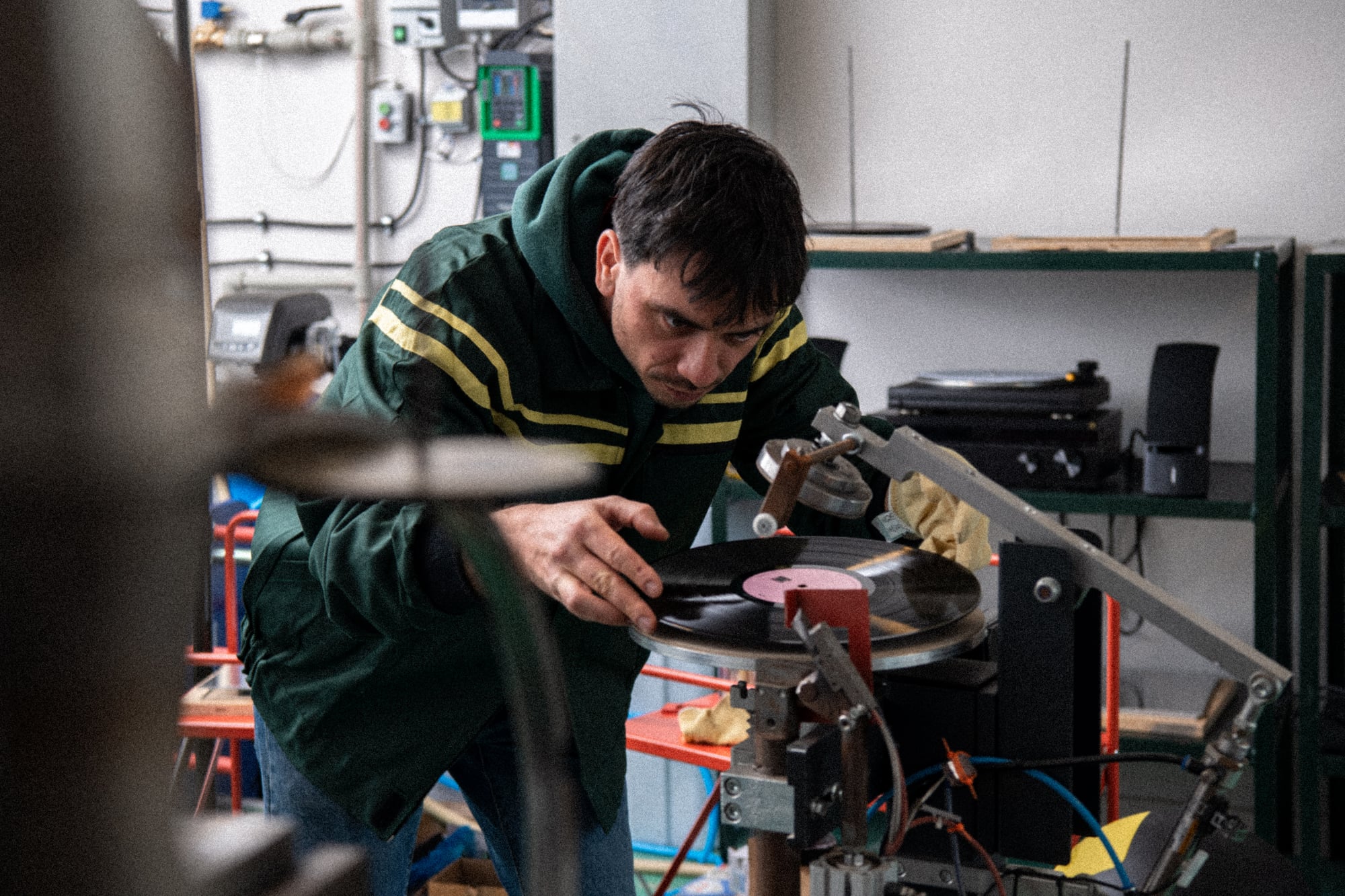
The work follows a sequence. If something goes wrong, you adjust. The problem has a location. The solution has a result. The feedback is immediate.
“You see it right away,” he says.
Music operates differently, though. The timeline stretches. You can spend hours, days, weeks, without knowing whether what you are making holds together. Then, when the result comes, it is less concrete.
That difference between immediate and delayed feedback, between visible and invisible results, shapes how he moves between two types of making music.
It also shapes how he listens.
For Grigovor, the distinction between digital and analog music is not just technical. It’s behavioral and almost ritual. After decades of digital convenience, the format has returned with unexpected force. He sees it less as nostalgia and more as a correction - restoring a need for a different kind of attention. Streaming allows for constant interruption - skipping, switching, fragmenting that attention.
“With streaming, you don’t really stay,” he says.
Vinyl demands something else.
“You put it on and let it play.”
There is no immediate exit. The listener is required to sit with the work as it unfolds. That condition - limited control over the experience - mirrors, in some way, the process of making the music itself.
On stage, the tension shifts again.
The difficulty is not the audience. It is the gap between intention and execution. His lyrics are dense, structured, and often precise. Translating that into a live setting requires balance.
“Sometimes it’s hard to maintain both,” he says, referring to technique and emotion.
Giving too much attention to one means ignoring the other. Grigovor still hasn’t figured out how to balance them.
His understanding of success is similarly restrained. It is not tied to scale or visibility, but to continuity - the ability to keep working without compromising the conditions that make the work possible.
Art comes first, but it isn’t isolated from reality. Practicality might not lead the creative process, but it persists.
“What matters is the order,” he says, then pauses.
After thinking for a while, he points to the entrance to the factory and tells a story of his girlfriend coming to the building in its early days and starting to shovel cement alongside him.
“That stuck with me,” he says.
It’s the closest he comes to defining success.
Back inside the factory itself, the work continues. Records are pressed, cooled, stacked. Each one passes through the same sequence, emerging as a finished object.
The work is controlled. Repeatable.
Outside of the factory and inside the studio, the process looks different. There are long unfruitful periods. False starts. Abandoned ideas. There are occasional moments where something holds.
“Most of the time, nothing comes out.”
But sometimes it does.